Drone First Responder system · Based in Traverse City, Michigan
First on scene.
Northern Michigan's emergency response gap is measured in minutes. Prelude closes it in seconds.
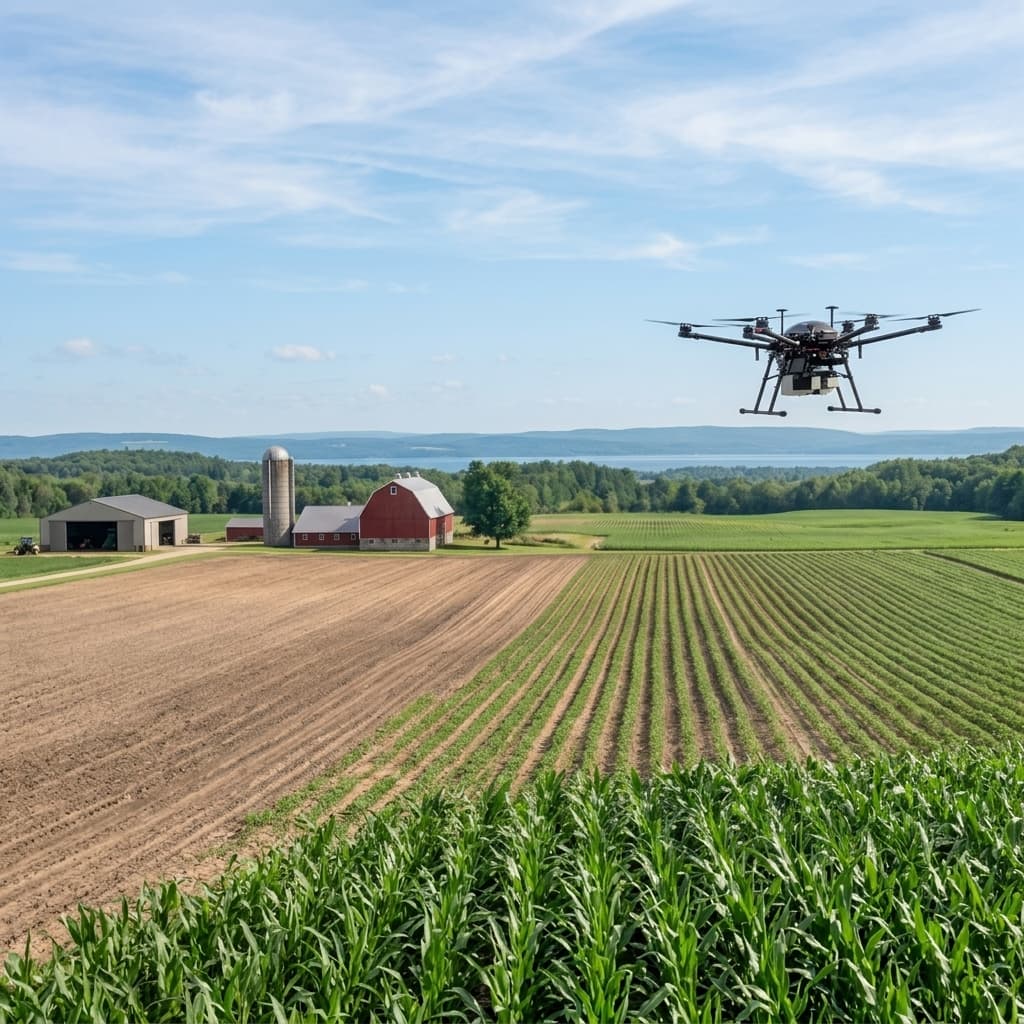
Northern Michigan's emergency response gap is measured in minutes. Prelude closes it in seconds.
In Northern Michigan, rural EMS response averages 14 to 26 minutes — and frequently stretches past 45 minutes in isolated areas or during peak call volumes. Regional hubs like Traverse City and Petoskey see far faster urban response times. But the vast majority of Northern Michigan and the Upper Peninsula are severe ambulance deserts. In cardiac arrest, neurologically intact survival drops sharply within the first several minutes. By the time the first unit arrives, the outcome is often already decided.
Drownings in inland lakes. Overdoses on forest roads. Accidents on M-72 and US-31 with no witnesses. Structural fires in cabins set back from county roads. Northern Michigan's geography — its defining quality — is also its greatest barrier to rapid emergency response.
Volunteer departments cover hundreds of square miles with limited staffing. Mutual aid requests add time, not subtract it. The 4-minute window — the critical period before brain damage begins in cardiac arrest — closes long before help arrives across most of our region.
That gap is what Prelude closes.
Prelude deploys a network of remotely stationed drones at dedicated ground-level docking stations across Northern Michigan. When 911 is dispatched, a drone launches automatically — no pilot on scene, no staging delay, no equipment check.
Prelude drones are US-made and NDAA-compliant, keeping federal grant programs like SHSP, BRIC, and COPS open to agency buyers. Target capabilities include a 10 lb payload, extended flight time, and a robotic battery and payload swap designed to relaunch the drone in under 40 seconds.
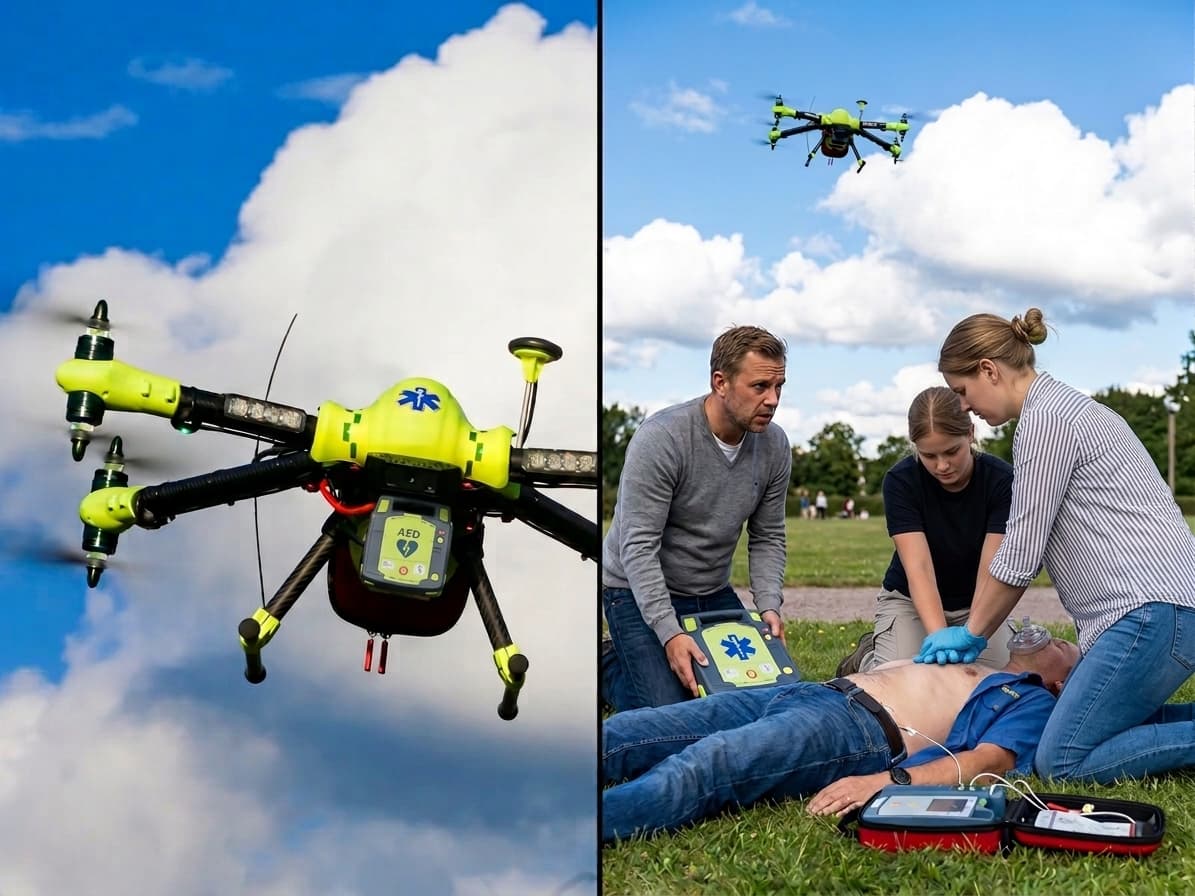
The drone carries an AED and naloxone directly to the scene — putting lifesaving tools in the hands of the bystander already on the line with 911, minutes before the first ambulance can arrive. Live HD video streams to dispatch the entire time, so ground units roll in already knowing the incident scale, number of patients, access conditions, and active hazards.
The drone does not replace your responders. It makes every responder more effective from the moment the call comes in.
Design target: airborne within 90 seconds of dispatch — no pilot on scene, no staging delay. A robotic battery and payload swap is designed to relaunch the drone in under 40 seconds.
Each drone carries an AED and naloxone to the scene — putting defibrillation and overdose reversal in the hands of the bystander who called 911, minutes before EMS can arrive.
High-definition video is designed to stream to your dispatch console over a triple-redundant link, giving command real-time eyes on the incident as ground units respond.
When a call comes in, your CAD system simultaneously triggers the nearest Prelude docking station. No separate process, no additional action from dispatch. The drone launches within seconds of the call being logged.
On a design target of under 90 seconds, the drone launches and flies direct-line to the scene. It carries an AED and naloxone and is built to stream live HD video to your dispatch console over a triple-redundant link — Starlink, 5G/LTE, and mesh — designed to hold connectivity where civilian networks are congested or unavailable.
Designed to arrive ahead of ground units, the drone delivers its AED and naloxone to the people already on scene — guiding the 911 caller through defibrillation or overdose reversal. Crews then roll in informed: number of patients, incident type, access conditions, active hazards already known before they step out of the vehicle.
Prelude drones are US-made and NDAA-compliant, built to meet CJIS and SOC 2 standards for public safety data handling. We stay platform-flexible — selecting hardware that fits each agency's needs rather than locking to a single vendor. Infrastructure partnerships, such as tower-sited docking, are under evaluation.
Prelude docking stations sit at dedicated ground-level sites, grid-powered with battery backup so a drone is always ready. Tower-sited docking and other infrastructure partnerships are under evaluation to extend coverage.
Command and HD video are designed to ride a redundant link — Starlink, 5G/LTE, and mesh — built to stay connected where any single civilian network is congested or down.
A 911 dispatch can trigger an autonomous launch with no pilot on scene. One remote operator can oversee an entire county fleet from a centralized console.
Redundant connectivity — including satellite — is designed to scale across Northern Michigan's forests, inland lakes, coastal stretches, and rural corridors without building new radio relay infrastructure from scratch.
Aerial reconnaissance before units arrive on scene. Active pursuit tracking, perimeter establishment, and missing person search support across rural and forested terrain where ground visibility is limited.
Scene size-up before the first apparatus commits. Structure fire access assessment, wildland fire perimeter tracking, and medical incident support including AED delivery to locations inaccessible by ground vehicle.
Regional situational awareness during multi-agency incidents, disaster response, and large-scale events. A single operator at your EOC can oversee the full county drone fleet in real time.
Prelude is designed from the ground up for government procurement. Every component of the program — hardware, network, operations, and training — is structured to align with public safety procurement standards and available grant funding streams.
Because Prelude runs on NDAA-compliant, US-made hardware, deployments may remain eligible for several federal and state grant programs available to public safety agencies:
We can assist your agency in identifying applicable funding streams as part of the program overview process.
We are actively seeking municipal and county partners across Northern Michigan for a 90-day proof of concept deployment. Pilot partners receive a fully operational docking station and drone asset, dispatch integration support, operator training, and a detailed outcomes report at the end of the engagement.
This is not a study. It is an operational deployment with real incidents and measurable results. At the end of 90 days, you will have the data you need to make a program decision.
Complete the form below and we will respond within one business day with a program overview and next steps.